Morning Habits: Pick a Few and Make Them Stick

The short answer
Choose two or three habits that fit into the time you really have between waking up and heading out, and always do them in the same order, each one tied to something you already do. Get ready the night before whatever you can. Track them in a short list you can check off in seconds, and keep a shorter version for mornings when you’re running late.
Why mornings, and why only a few
Mornings have a practical advantage: they look alike from one day to the next. You get up in the same place, go through roughly the same motions, and nobody has sent you a message that changes your plans yet. A habit needs a stable context to take hold, and this is the most stable part of your day.
They also have a limit that the routines you see online tend to forget: they’re short. Between waking up and the moment you have to leave or start work, you may have forty minutes, and a good chunk of that already goes to the shower, breakfast and, if you have kids, the kids. A one-hour routine with meditation, a workout, reading and journaling doesn’t fit in that time. It lasts three days on vacation and stops when work starts again.
You can work out the right size. Note when you wake up and when you need to be ready, subtract what can’t be squeezed, and look at what’s left on an ordinary morning. If ten minutes are left, your routine is ten minutes long.
Choose two or three habits
Start from what you want to change, then look for the smallest action that helps. A few examples that fit into a normal morning:
- drinking a big glass of water before your coffee
- five minutes of stretching
- a few minutes of meditation, sitting on the edge of the bed
- reading two pages while the coffee brews
- writing three lines in a notebook
Don’t take on more than three at first. Each one should be easy to describe in one sentence and to check without debate: “stretching done” is clear, “start the day better” isn’t. If you’re unsure how to phrase it, the article on how to build a habit that sticks explains how to make it small enough that you won’t skip it.
Be wary of habits that depend on gear or the weather. Running in the morning is a nice idea, but it needs clothes laid out, time for a shower and decent weather outside. Keep it for two or three set days a week and leave the daily routine to actions that need nothing.
Also leave out what you’d do anyway: reading email, scrolling the news, checking your calendar. Putting those in your routine makes it longer and gives you nothing in return.
Put them in a fixed order
In a morning routine, each action is the signal for the next one, which saves you from making decisions while your head is still foggy. Tie the first habit to something you already do without thinking: putting your feet on the floor, switching on the kettle, stepping out of the shower.
For example: you get up, drink your glass of water in the kitchen, start the coffee, stretch while it brews, then drink it while reading two pages. The order matters more than the time. If you sleep in thirty minutes on a Saturday, the sequence runs the same way, thirty minutes later.
Get ready the night before whatever you can, since that often decides how the morning goes. The glass by the sink, the mat rolled out, the book on the table: every object already in place removes one chance to put it off until tomorrow. Your phone works the other way. If you open it before the routine, there’s a good chance the ten minutes you planned disappear into notifications. You can leave it charging outside the bedroom, an idea covered in the article on evening screens.
Track them without spending time on it
Checking off a habit should take less time than doing it. In HabitLove, the List view of the Habits tab is made for this: one row per habit, with the button to check it at the end of the row, so three habits take three taps.
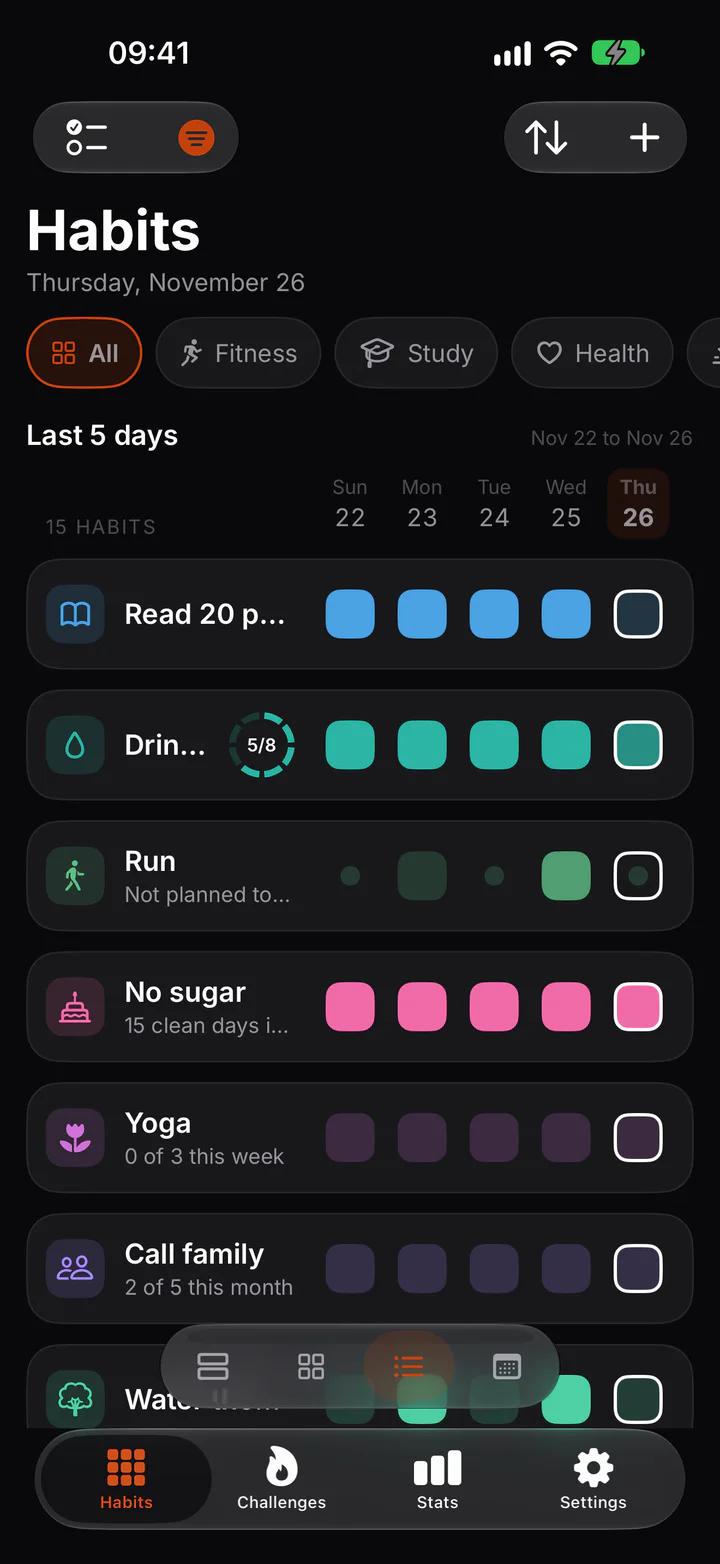
If you also track evening or weekly habits, the list grows and your morning ones get lost among the others. To find them, the app has a category called “Morning”: give it to your morning habits, and the category filter at the top of the Habits tab shows only them. You can also create your own categories if “Morning” isn’t enough, say one for work-from-home days.
A reminder can help in the first weeks, as long as you set it for a time when you’re already out of bed. In a habit’s “Reminders” screen, you choose the time and the days. The reminder stays quiet once the habit is checked for the day, so it only goes off on mornings when you forgot. From the notification, “Done” checks the habit without opening the app.
For a habit that doesn’t come back every day, like running on Tuesday and Saturday, the “Goal and streak” screen offers “Specific days.” The other days don’t break your streak and don’t send a reminder.
Mornings that go off the rails
You will have bad mornings: an alarm that doesn’t go off, a sick child, an earlier train to catch. You might as well plan for them. For each habit, decide now on its backup version, the one that takes thirty seconds. The glass of water stays the same, stretching shrinks to two moves, reading to a single page. You check off the day with that version, and the sequence stays in place for tomorrow.
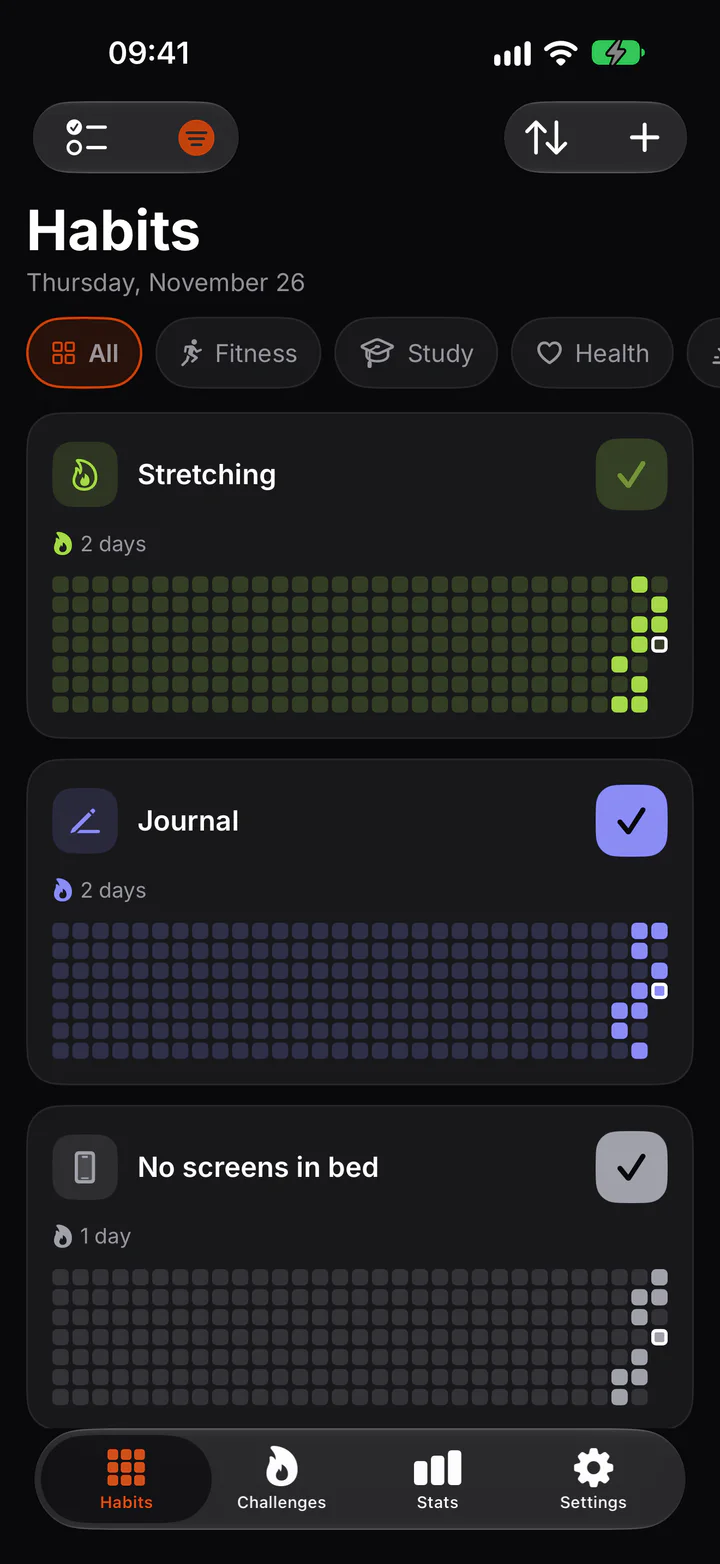
Skipping one morning doesn’t cost you much: your grid keeps all the days before it, and one gap in a full row barely shows. A routine wears down when you skip several mornings in a row without asking why. If that happens, look at the length of the routine before you doubt your motivation: most of the time, it has grown without you noticing.
Adjust after two weeks
Two weeks give you enough mornings to see what holds. Look at your grid habit by habit. The one that’s almost full is settled, and you can leave it alone. The one with regular gaps, always on Mondays or always on office days, is telling you that the slot doesn’t exist that day: you need to move it or shorten it.
Only add a new habit when the first ones happen without effort, and one at a time. If you want a regular moment for this check, the weekly review explains how to read your numbers in ten minutes on Sunday.
Some habits turn out not to belong in the morning at all. Reading often works better at night, and water gets drunk all day long, which the article on hourly water reminders covers separately. Moving them out of the morning shortens your routine, and the two or three actions left in it have a better chance of lasting.
Frequently asked questions
How many habits should a morning routine have?
Two or three are enough to start. Add up how long they really take and compare that with the time you have on an ordinary weekday morning. If the routine doesn’t fit on a tired Tuesday, it’s too long. You can add one once the first ones take no effort.
Do I need to get up earlier to have a morning routine?
Not necessarily. A ten-minute routine fits into most mornings without touching your alarm. If you want to wake up earlier, go to bed earlier too, or you pay for the routine with sleep and it won’t last.
What about mornings when I’m running late?
Plan a short version of each habit in advance: a glass of water, two minutes of stretching, one page. You check off the day with that version and the routine stays in place. Skipping a morning entirely isn’t a big deal either, as long as you pick it up the next day.
How do I see only my morning habits in HabitLove?
Give those habits the “Morning” category, then use the category filter in the Habits tab. The List view then shows one row per habit, which you check off with one tap.

Track this habit in HabitLove
One grid per habit, with reminders and streaks. Free, no account needed.